- Location:
- Coventry
- Services:
- Client:
- Rainier Developments Limited
- Size:
- 11,000 m2 GIA
- Sector:
- Residential - Student
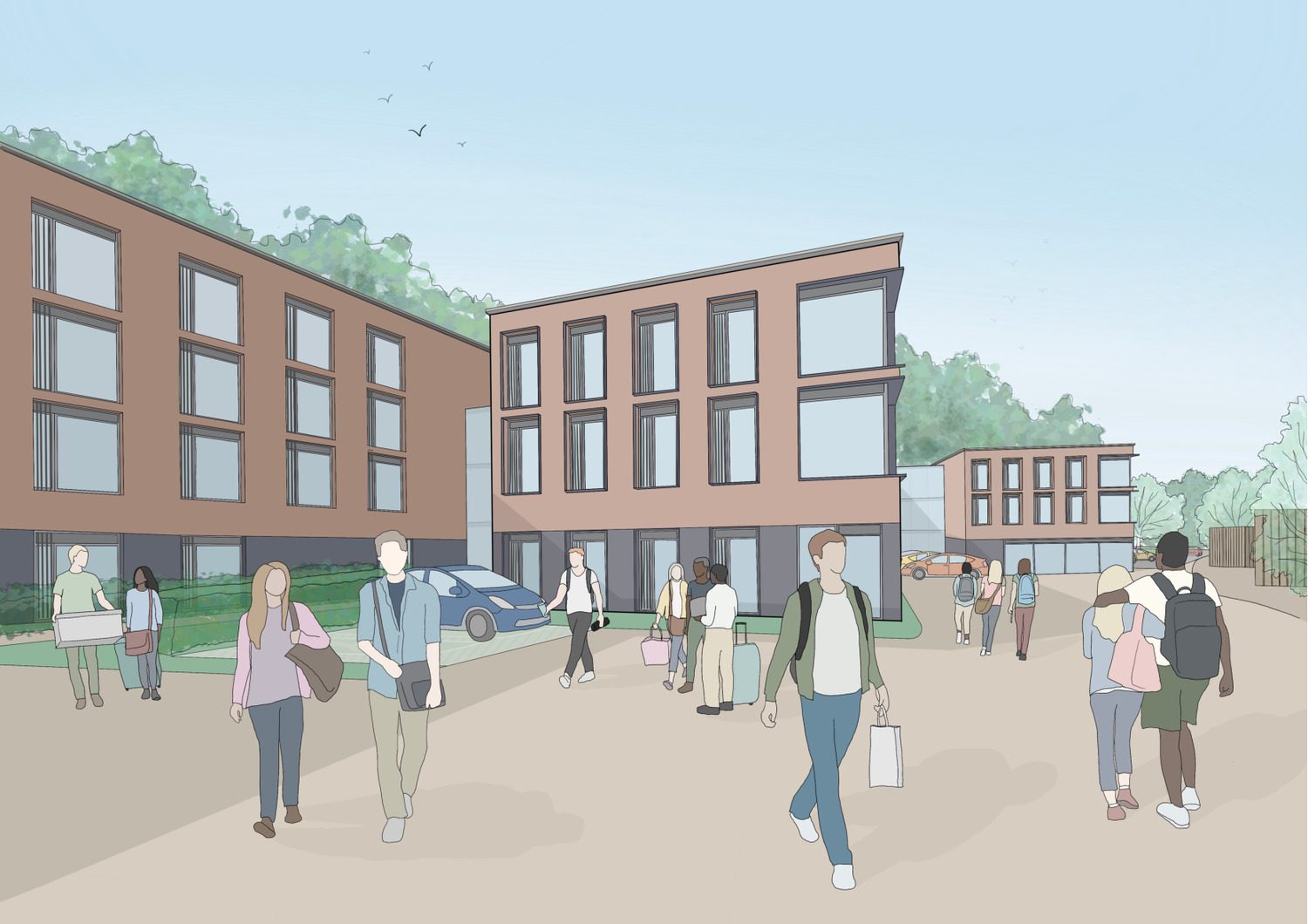

Located in a sustainable and accessible location, the new student accommodation adjoins the University of Warwick’s main campus and is within 10-minutes walking distance of further University amenities.
Creating a high-quality accommodation that enhances the existing natural environment, respects the ecology, heritage and context, and is well connected to the University’s core campus make up the vision of the scheme.
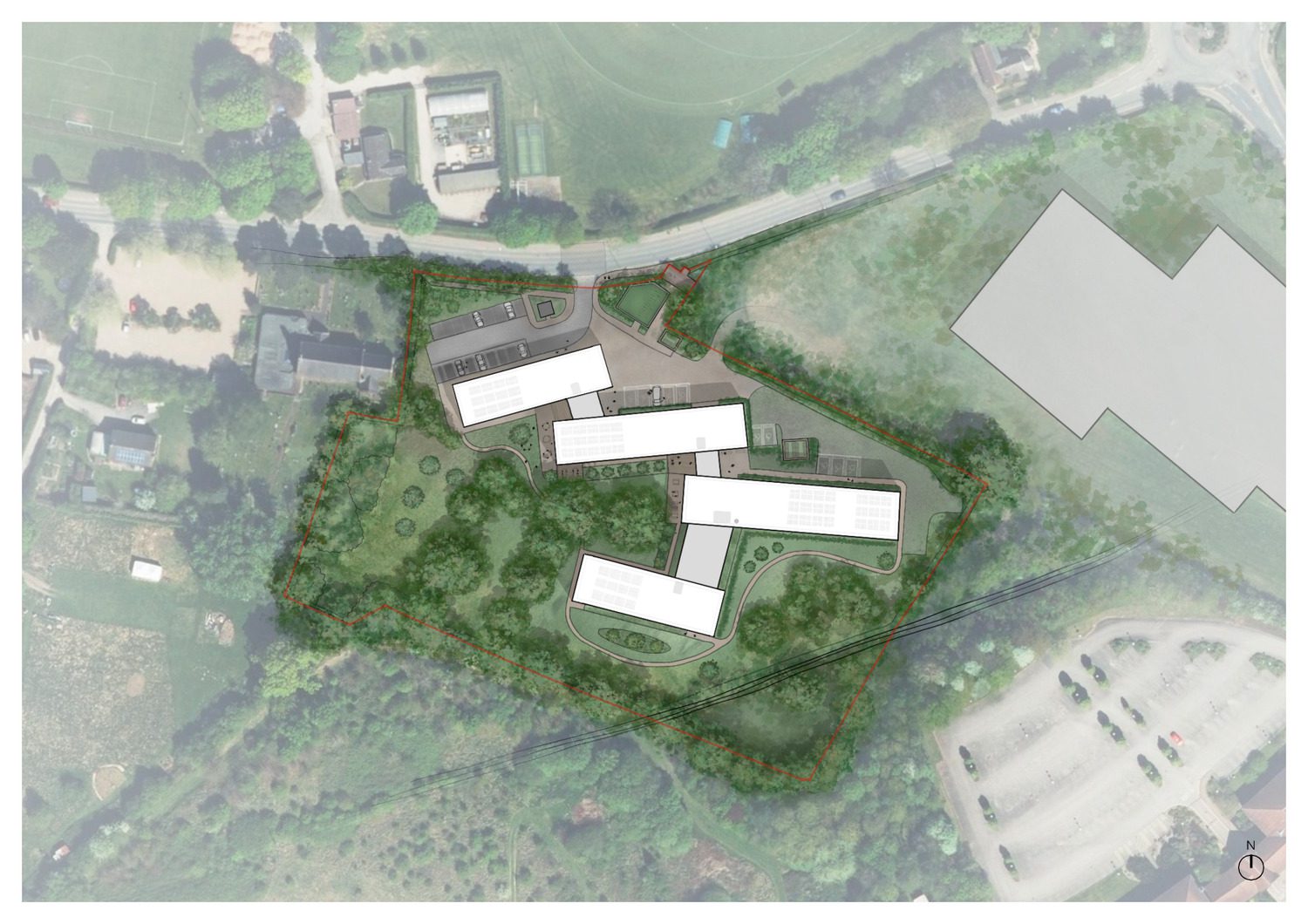
The proposal, set on a Brownfield site, makes use of an existing builder’s yard and previously developed parts of the site to accommodate the building. With the Grade II Listed St. John the Baptists adjacent to the site, plus 20 high quality and valued mature oak trees, the student accommodation has been sensitively designed and centers around the retention and emphasis of natural surroundings such as navigating the significant constraint of designing the accommodation around the oak trees.
The Vision
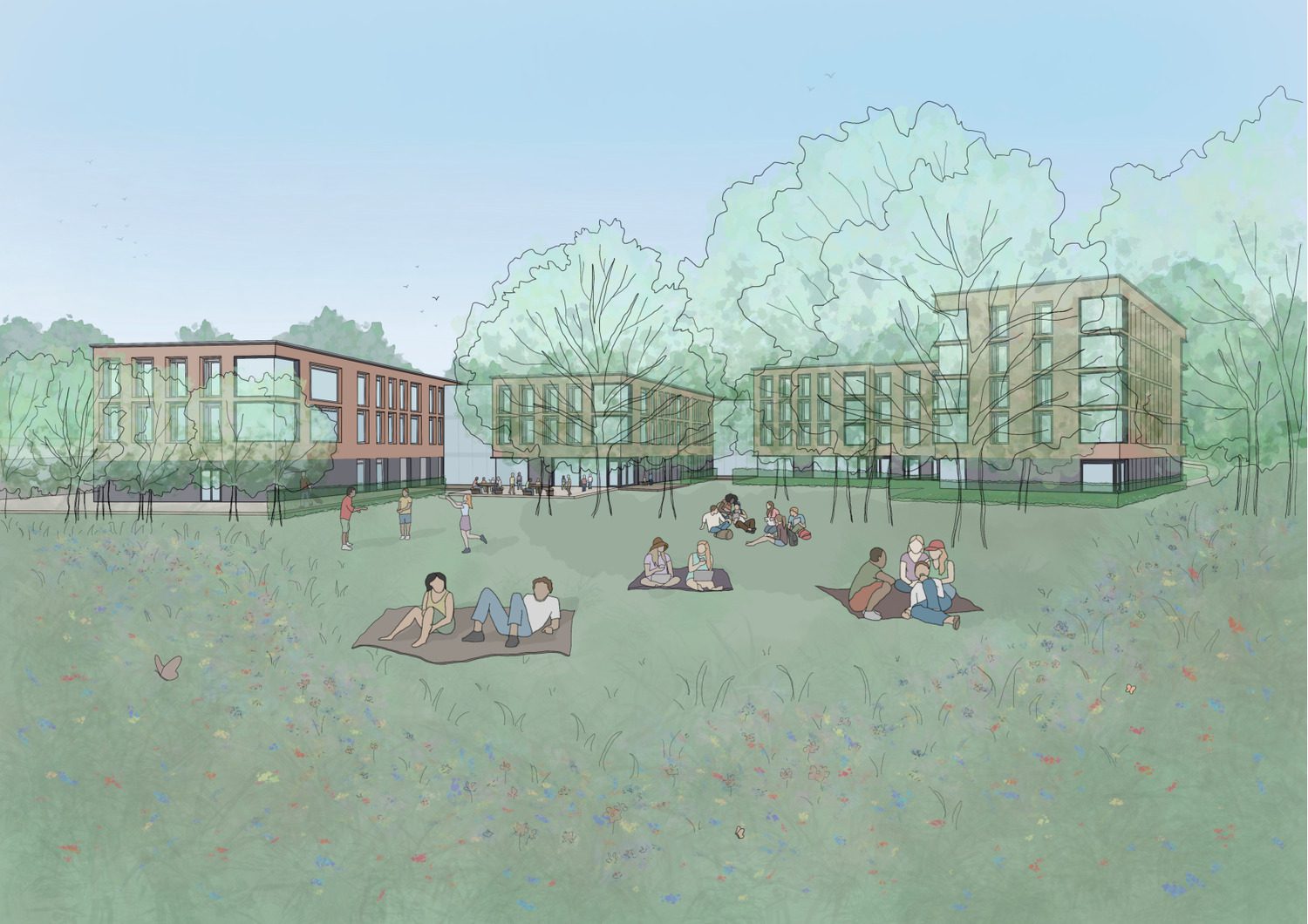
maber’s masterplan sees four accommodation blocks of three to five-storeys arranged in a fan, allowing for the full conservation of the trees. This careful siting amongst the trees also creates a variety of external spaces that support both active use and quieter areas of reflection and contemplation.
A fabric-first approach to sustainability is intended and by improving the thermal performance of the building, the requirement for heating and cooling will be reduced and energy consumption minimised. The use of Passivhaus principles, where appropriate, will also assist in the reduction of energy consumption and provide economic benefits to the operation of the facility.
There is also a sustainable access strategy which promotes walking, cycling and the use of public transport alongside the site’s existing character being utilised to provide a high-quality outdoor amenity space. In doing this, Biodiversity Net Gain (BNG) and sustainability guidelines will be adhered to.
Should any trees be affected by the proposed development at the detailed design stage, they will be sensitively worked around to minimise any adverse effects. This can be achieved with the use of ground protection, no-dig technologies, hand digging and access facilitation pruning, where applicable.
Landscape
The landscaping scheme has been designed to promote biodiversity, utilising native species to encourage insects and wildlife, with an enhanced public realm to promote a welcoming approach to the building.
In addition, new planting will be added with the potential for longevity within the landscape and it will enhance the species diversity for the site, whilst also contributing to the green infrastructure for the area.
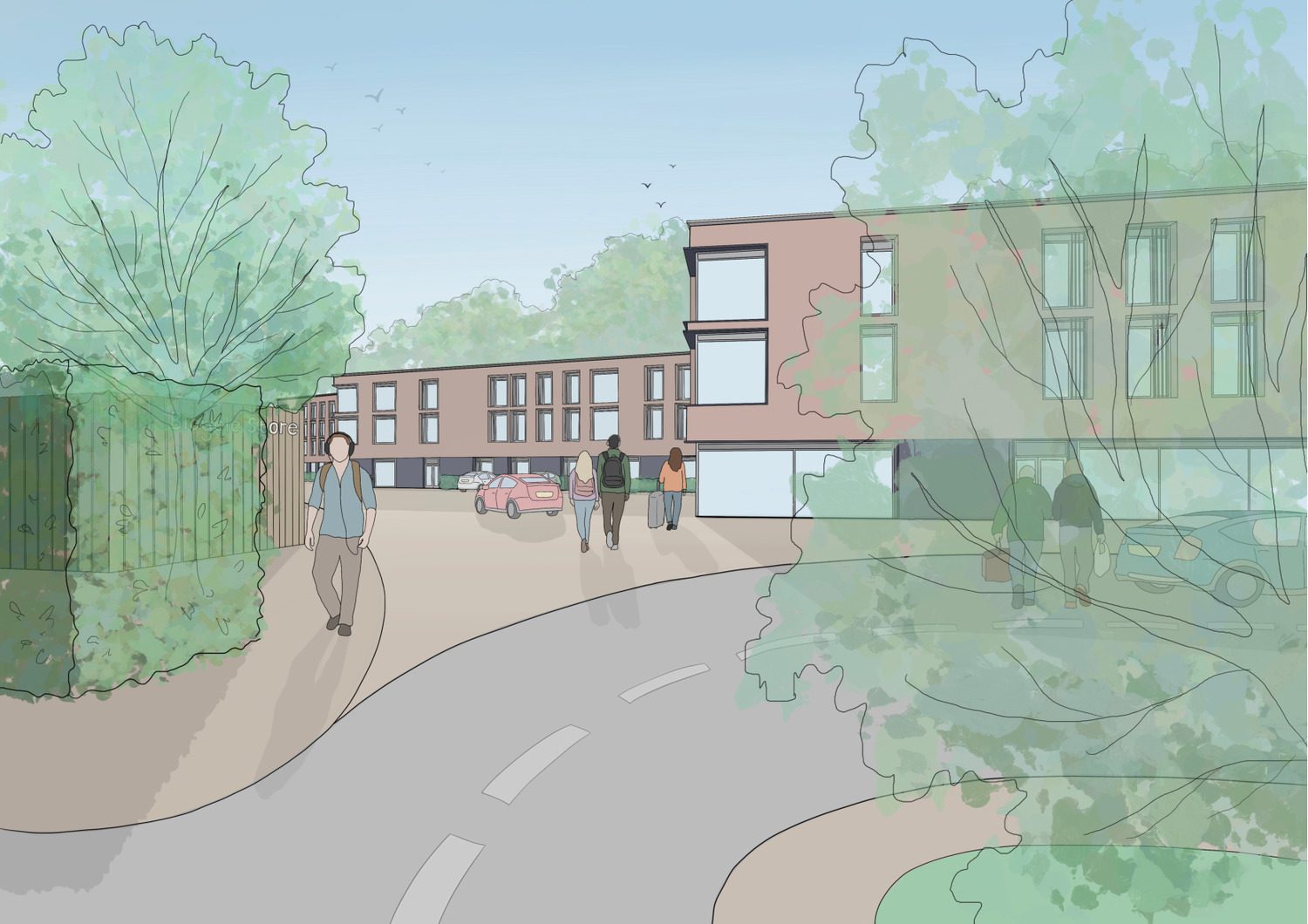
The existing site entrance will be upgraded to serve as the main vehicular access, meeting all current standards. Access for other essential services – specifically refuse collection, emergency services, and student drop-off during term time – will be managed through a shared-surface plaza area that incorporates reinforced geomesh landscaping.