Posted: 27.03.2026
Our Digital Team is highly experienced and skilled in delivering Building Information Management (BIM) compliant projects, but as our Director Ian Harris found out talking to Josh Chrystal, our Head of Digital, digital workflows bring even more benefits for Data Centres.
Ian asked Josh to explain the benefits of
data rich ways of working.
What is on offer with a "digital first" approach?
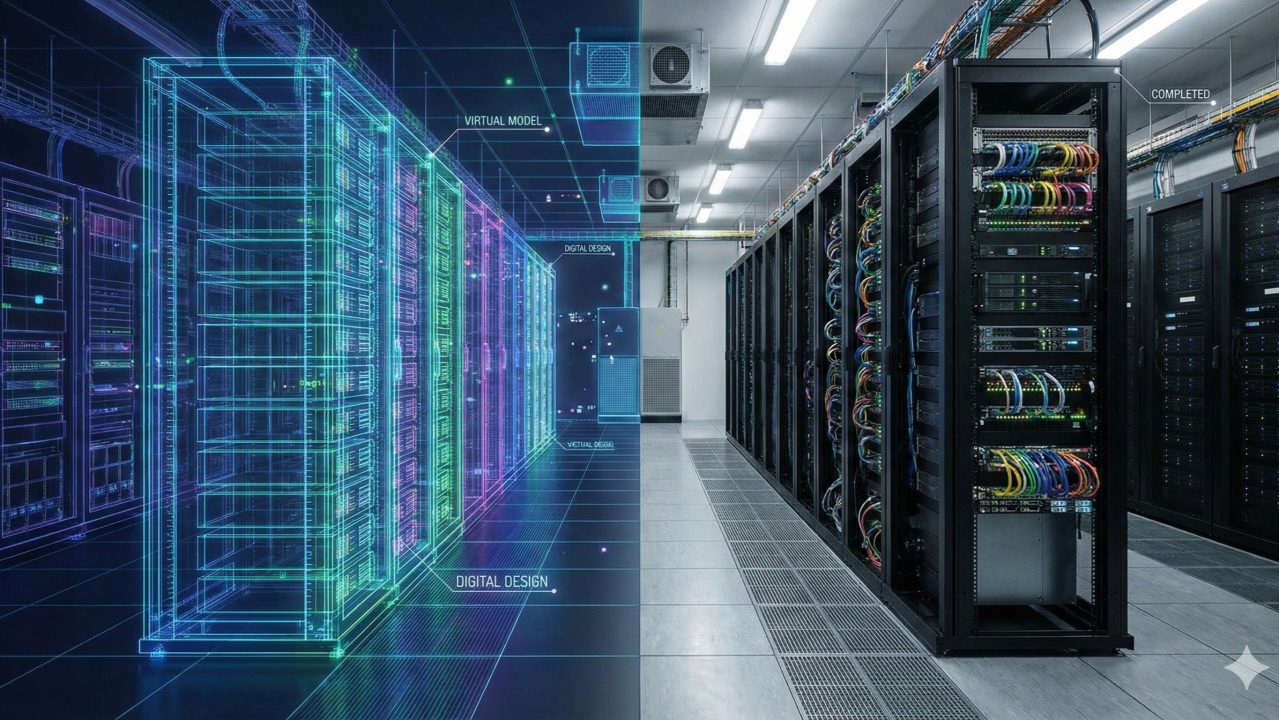
The maber team’s digital first approach is embedded into everything we do. Our single source of truth for a project is a centralised, data-rich 3D model. The model is where all of the critical decision-making happens and it ensures we are referencing the most up-to-date information at all times. This means we can quickly assess design options and build value engineering proposals, based not only on physical design, orientation or layouts, but on whole life carbon assessments, embodied carbon and proving how different approaches can meet those targets.
A major advantage we deliver on projects is that all of our digital capabilities are in-house. We have a dedicated BIM and Digital team, and we are certified to ISO 19650 meaning we can guide clients through the entire process. We capture their information and data requirements on the project in plain language, help them build their requirements, manage the project through construction and make sure that the final information is useful, accurate and delivered effectively.
How does all this come together in Data Centre design?
- Assessing and meeting sustainability targets is critical due to the heavy energy use in the building. Good data makes a responsible approach to carbon much more achievable. With our 3D data-rich BIM models, we can quickly align solar gain, embodied carbon and Biodiversity Net Gain (BNG). Our single model approach also makes it possible to integrate with our Landscape team, ensuring that projects meet all their environmental targets.
- We have experience in producing Virtual Reality (VR) and Augmented Reality (AR) experiences so we can present 3D models and review clashes in a natural way. This is particularly useful for those stakeholders integrating equipment who are not from a construction background; they can look at a building, see where the clashes are, walk around and review things that aren’t necessarily picked up with traditional methods. Even better, it gives the whole team a chance to optimise designs and spot opportunities before construction starts. A priority for us is the client’s long term facility management and health and safety needs.
- Using the RIBA Smart Buildings Overlay as a guide, we can discuss with clients how they want to develop their Digital Twin strategies. By creating a strategy at the early design stage, we can ensure that these principles are delivered through the design phase and into construction. With increasingly complex cooling systems and more managed heat export, interactions between building systems need more management than ever. An effective Digital Twin can go beyond synchronising live data management or driving an FM platform, it can also start to analyse trends and facilitate proactive maintenance and management.
So where has this approach brought value to real projects?
Where we bring value is being Digital experts that are part of a technical architect’s practice. We’ve delivered a multitude of complex industrial manufacturing buildings and acute hospitals with complex cooling, gases and data infrastructure. Combining our technical knowledge with our digital skills, we offer an in-house capability that provides real value to a project.
Our digital experience is focussed on delivering pragmatic, positive outcomes for our clients that go beyond a typical workflow. For example, on one of our sensitive high-tech manufacturing projects, we needed to solve a long term problem. A large piece of machinery that was extremely sensitive to ground vibrations was fixed into the ground with 5m metal rods that had the potential to break over time. The huge metal rods needed to be able to be replaced with the minimum down time. Using digital models, we were able to design the building to accommodate lifting the rods out and mock-up a virtual space to work through the process. Working with the whole design team, our model allowed us to determine how the machinery could be accessed and allow the client team to practice changing the rods in virtual reality. As a result, the roof structure was designed in such a way that the process could be accomplished and everyone involved knew, through hands-on virtual experience, what was involved and what part they would need to play.
This was not just basic clash detection, but bringing our knowledge and expertise to solving a real world problem – not limited to the building design, but working with the whole client team and taking it to the next level to unlock intricate solutions.
In a Data Centre, avoiding downtime is also critical so digital rehearsals for replacements of modular rack, packaged cooling systems, scheduled equipment changes or disaster recovery at the design stage will pay dividends over the lifetime of the facility.
We’re using our models to go beyond checking clashes, and instead reaching for accessibility, management, maintenance & cleaning compliance through automated space checks within models.
What advice do you have for Clients?
It is important to remember that with the latest ISO 19650 Building Information Management standards, the definition of digital requirements needs to be a client-led process.
We are uniquely positioned to provide pragmatic advice at every stage of a project’s journey, from strategic inception to design and delivery.
At every stage, requirements will be aligned to provide a proportional set of data at handover, in a format that is suitable for on-going client use. This in turn provides the best return on investment from following a BIM process on the project.
By utilising tools like VR and AR, we are confident in engaging as many stakeholders as possible that previously might have been excluded from this process. We are committed to making the process human-centric and making these digital model reviews accessible for all.
Our BIM and Digital teams will always deliver excellence in the use of technology and digital delivery, but we cannot stress enough the importance of human stakeholder engagement in this process.