The addition of more software is creating a gap between digital ambition and execution that cannot be ignored, which is why we take a human-centric approach to BIM Delivery.
Josh Chrystal is our Head of Digital and leads these principles. maber Digital supports projects ranging from digital twin asset management to management to mixed reality visualisation and sustainability-driven workflows.
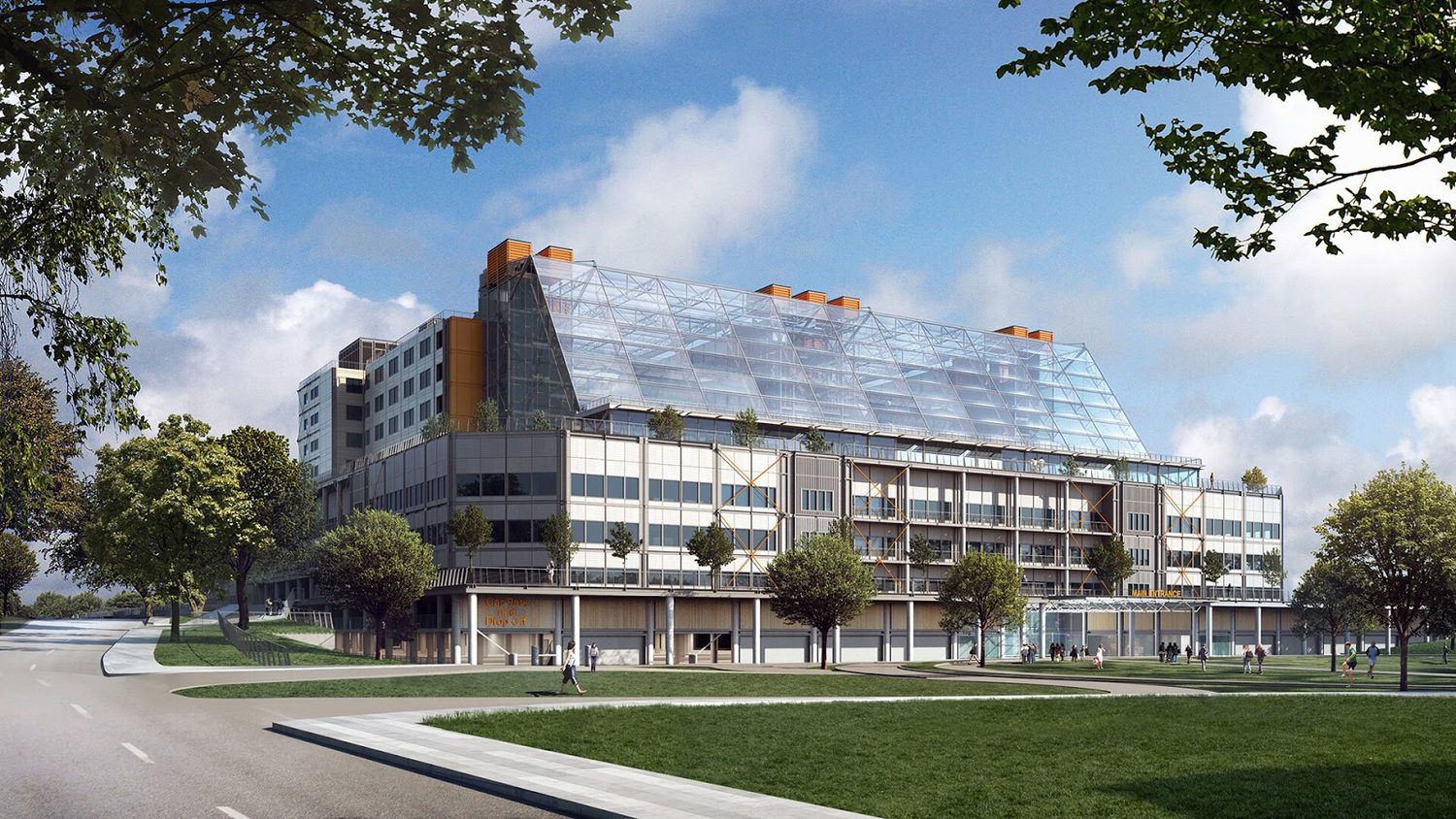
On the £1bn Midland Metropolitan University Hospital (MMUH) project in Birmingham, we effectively applied this methodology to manage a project of significant scale and complexity for the NHS.
We asked Josh to talk through our approach, the project and what maber brought to the table.
What did we face when we entered the project?
Our team entered a high-stakes, heavily disrupted environment following the liquidation of the original contractors on the MMUH project in 2018.
Appointed alongside the new delivery team, we were tasked with redefining the BIM strategy mid-flight, navigating a high-pressure landscape where precision was paramount and the margin for error was non-existent.
Despite the building’s structure and external envelope being almost complete, a significant amount of services coordination was unresolved. Following our “back-to-basics” approach to BIM, our first task was to perform a high-level of Client BIM requirements and review proposed delivery team strategies.
What we discovered was:
- Documentation that was, in parts, incomplete or lacking the detail needed for delivery.
- A legacy BIM strategy developed years earlier, no longer aligned with current best practices.
- A compliance-led approach to BIM, focused on meeting requirements rather than delivering clear outcomes.
- Disconnected workflows that did not reflect how teams were coordinating on-site.
- Issue management was a critical pain point. Coordination heavily relied on static spreadsheets that were difficult to maintain and rarely engaged with. On a project of this scale, where thousands of clashes needed to be resolved, this created a significant risk to both efficiency and accuracy.
Managing service penetrations and fire-stopping was a major challenge. Validating roughly 10,000 builder’s work openings required accuracy, consistency and traceability, especially given the strict fire safety regulations in healthcare.
A gap existed between digital processes and on-site reality. Teams needed to coordinate with existing structure, validate completed work, and deliver design intent with confidence.
What value did maber add to the project?
We adopted a practical approach of simplifying workflows and embedding them into the teams’ existing processes.
Issue management was redefined as part of design management rather than as a separate BIM task.
Our rule-based model checking in Solibri alongside BIMcollab for BIM coordination helped support this and create a connected, accessible issue management workflow.
This enabled:
- A centralised, shared platform for issue tracking.
- Clear ownership and accountability across disciplines.
- Direct access for designers within their authoring tools.
- Transparent communication without relying on disconnected spreadsheets.
- This marked a fundamental change in how teams engaged with coordination. Previously, large Excel reports (sometimes containing hundreds or thousands of clashes) were distributed with limited visibility and engagement.
The same philosophy was implemented for handover information delivery. Encountering significant COBie demands, we collaborated with the appointed facilities manager and the NHS Trust to identify essential data requirements.
They ensured asset information was validated, usable, and matched to operational needs by prioritising outcomes rather than volume and utilising structured, database-driven workflows.
What did these changes achieve?
Our approach turned a fragmented digital environment into a more structured, reliable and collaborative way of working.
- Thousands of coordination issues managed through a centralised, accessible platform.
- Over 10,000 service penetrations tracked and validated with greater confidence and traceability.
- Improved engagement across multidisciplinary teams by embedding issue management into daily workflows.
- Reduced reliance on spreadsheets, minimising errors and inefficiencies.
- Delivery of structured, usable asset information aligned with operational requirements.
Outside of operational improvements, the project highlighted that adopting a human-centric methodology can effectively mitigate coordination risks, enhance oversight, and provide multidisciplinary teams with greater control over complex project delivery.
Final Thoughts
MMUH has since become a path finder project as part of the New Hospital Programme (NHP), an ambitious initiative aimed at delivering 40 new hospitals by the year 2030. Digital lessons learnt from MMUH have helped inform the definition and delivery of Information Management best practice on schemes going forward.
The MMUH project serves as a clear example of how a more effective approach to digital transformation can be realised within BIM.
Progress was achieved by aligning people, processes and technology in a way that reflected the realities of the project, rather than over-relying on new tools or emerging technologies.
Maintaining a ‘human-centric’ approach to digital processes is essential for delivering value, rather than reacting to technological shifts. By pivoting from traditional BIM toward a focus on Information Management, the use of well-organised, open-source data will be critical in enabling AI systems to operate at their highest capacity.